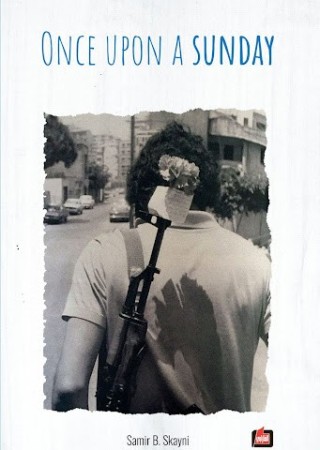
is a collection of five stories from the Lebanese civil war, following five ex-fighters whose lives unfold between front lines, checkpoints, and fragile routines, and tracing them from early childhood to their present-day critique of their own past. Addressed both to those who lived through the war and to younger readers who inherited its silence, the book listens to their memories and contradictions, inviting a critical reading of that period and its lingering traumas. (Samir Skayni)
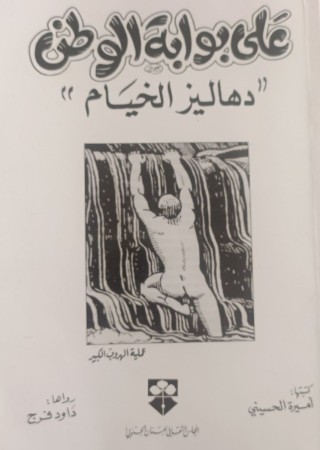
A biographical account documenting the life of Dawoud Faraj, from childhood to his escape from the Khiyam detention center, tracing the stages of occupation, resistance, imprisonment, and struggle within the camp. (Written by: Amira Al-Husseini, Narrated by: Dawoud Faraj) (Not available in English)
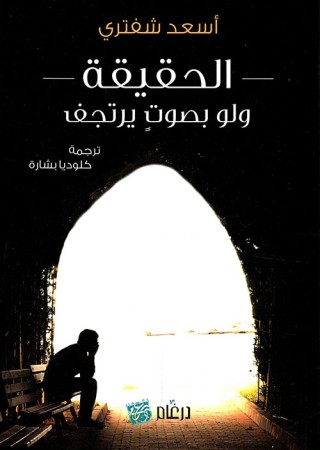
Assaad Chaftari’s book, published by Dergham Publishing, recounts his profound transformation from a former fighter to a peace activist. In this deeply personal narrative, he lays bare his past, openly confronts his remorse, and shares a story of redemption, revival, and a renewed commitment to forgiveness and dialogue. The book is available at Virgin Megastore, Antoine Libraries, and on antoineonline.com , where you can also follow updates about it.
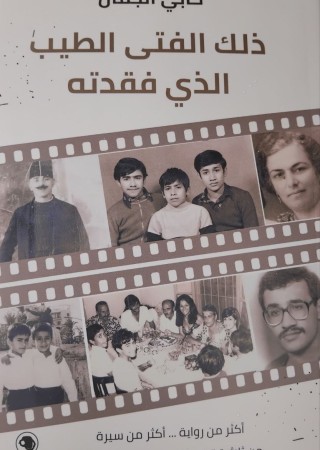
In the cemetery, I met the gravedigger, a man who has lived there with his family since the beginning of the war. He rushed toward me, extending his hand in greeting, then quickly turned as I pointed to one of the graves, asking about the person buried there. It was an elaborate grave topped with a winged statue carved from Italian marble. I had gestured instead of shaking his hand—to avoid placing my hand in his, though, isn’t he a gravedigger?
He told me how, after every clash, he would collect the bodies of fighters thrown near the cemetery, regardless of their religion, and bury them in pits he had prepared in advance. “This is a Christian cemetery, but in the end, it’s a cemetery—death does not refuse anyone,” he said.
On one occasion, he found two bodies: the first, a Christian fighter named Michel, whose party ID he had found, and the militia he belonged to embroidered on his shirt; the second, a Muslim fighter named Mahmoud, with the insignia of his party stitched onto his sleeve. He buried them together in a single pit. As soon as he laid Mahmoud’s body atop Michel’s, he opened his arms, as if embracing him.
“They refused to meet in life, but in death they came together in the same grave,” he said.
The story shook me, and I found myself holding him, murmuring, “Perhaps… I sent you someone here one day to bury him.” He did not understand, nor did I attempt to explain what I had said. (Not available in English).
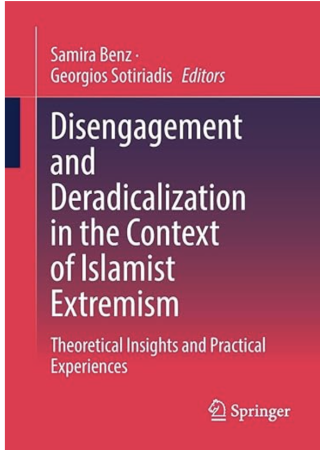
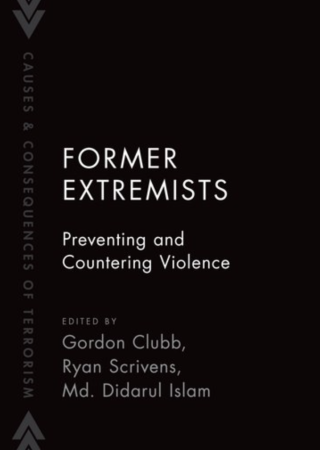
The book Former Extremists explores the experiences, transformations, and contributions of individuals who have left extremist groups, examining their roles in peacebuilding and countering violent extremism. Chapter 10, titled Formers in Lebanon, is authored by Christina Foerch and Julie M. Norman focuses on how former extremists in Lebanon established Fighters for Peace (FFP) in response to the resurgence of conflict in 2012, analyzing their contributions to conflict prevention, peacebuilding, and P/CVE initiatives.
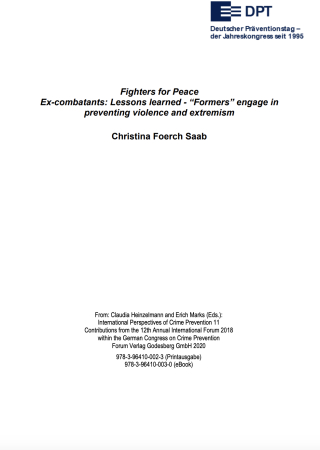
Working with “formers” (former extremists and ex-combatants) in Preventing and Countering Violent Extremism (P/CVE) can be very impactful on target groups such as marginalized and excluded youth who are at the brink of radicalization or who have already taken the path of extremism. This article highlights the work of Fighters for Peace (FFP) from a frontline practitioners’ angle. Fighters for Peace is a Lebanese Non-Governmental Organization composed of former combatants of the Lebanese civil war from different political, religious and social backgrounds who have undergone a profound personal change process and who engage now in peace building, reconciliation processes and the prevention of extremism and violence.